
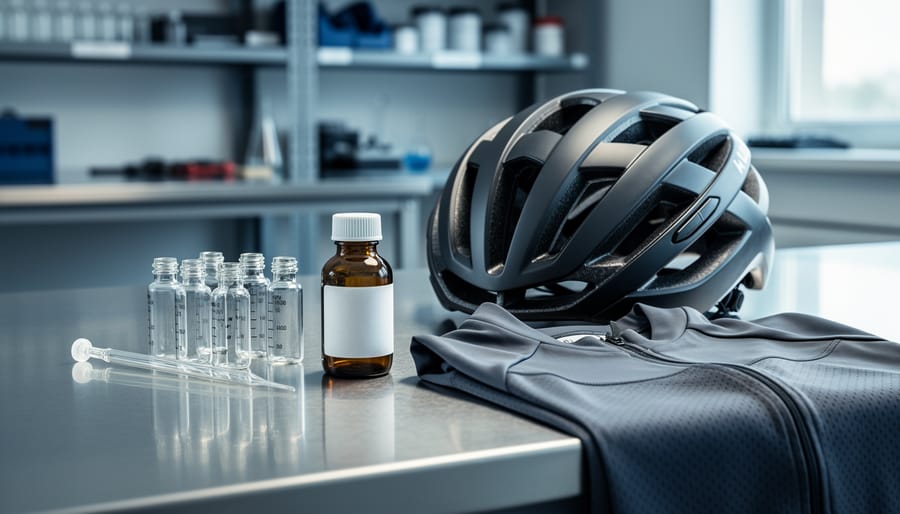
Research peptides are synthetic chains of amino acids sold online for laboratory and experimental use, not for human consumption. If you’ve come across ads for a Kylo Peptides online store or similar vendors while browsing cycling forums or fitness content, you’re not alone. These products have crept into conversations around athletic performance, recovery, and endurance, marketed with vague promises and little regulatory oversight.
Here’s what you need to know: research peptides exist in a legal gray area. They’re not approved by the FDA for personal use, and sellers often include disclaimers stating their products are “not for human consumption” to sidestep regulations. Yet they’re widely promoted to athletes, including cyclists, as shortcuts to faster recovery, better muscle repair, or enhanced fat loss.
The reality is far messier. Quality control is inconsistent. Purity isn’t guaranteed. Side effects range from mild irritation to serious hormonal disruption. And in competitive cycling, many of these substances fall under anti-doping rules, meaning using them could disqualify you from races or damage your standing in the community.
This article isn’t here to sell you anything or shame your curiosity. We know the pressure to perform, to bounce back faster, to feel stronger on every climb. But we also know that your health and integrity matter more than any quick fix.
We’ll walk through what research peptides actually are, why they’ve become popular in cycling circles, the real risks involved, and what alternatives exist that won’t compromise your safety or your values. You deserve better than unregulated substances marketed through loopholes. Let’s explore what that looks like.
What Are Research Peptides, Exactly?

Think of peptides as short sentences in your body’s instruction manual. While proteins are entire paragraphs made up of hundreds or thousands of amino acids, peptides are brief chains, typically between 2 and 50 amino acids strung together. These smaller sequences act as messengers, telling your cells what to do: heal tissue, produce hormones, regulate appetite, or manage inflammation.
Your body naturally produces thousands of different peptides every day. Insulin, for instance, is a peptide that regulates blood sugar. Growth hormone-releasing peptides trigger your pituitary gland to produce more growth hormone. When you see “research peptides for sale” online, companies are offering synthetic versions of these naturally occurring messengers, manufactured in laboratories rather than extracted from biological sources.
- Peptides
- Short chains of amino acids (usually 2-50 units) that act as signalling molecules in the body, smaller and simpler than full proteins.
- Amino Acid Chains
- The building blocks linked together to form peptides and proteins, with the chain length determining whether it’s classified as one or the other.
- Bioavailability
- How much of a substance actually reaches your bloodstream and cells to have an effect, which varies widely depending on how peptides are administered.
- Research-Grade Compounds
- Substances sold “for laboratory research only” rather than human consumption, a legal designation that doesn’t guarantee purity, safety, or accurate labelling.
The “research” label is where things get murky. Calling something a research peptide is primarily a legal workaround. Because these compounds haven’t been approved by regulatory bodies like the FDA for human use, sellers market them “for research purposes only” to avoid classification as unapproved drugs. This phrasing lets companies sell peptides without the rigorous testing, quality control, and safety standards required for supplements or medications intended for human consumption.
What you’re actually buying when you purchase research peptides is a substance intended for laboratory experiments, not athletic performance. There’s no guarantee about purity, accurate dosing, sterility, or whether the vial contains what the label claims. It’s essentially chemistry lab material being repurposed by people hoping for physical benefits, a practice that comes with significant risks we’ll explore ahead.
Why Cyclists Are Talking About Peptides

Peptides have crept into cycling circles for a simple reason: they promise faster recovery and better performance without the stigma of traditional doping. You’ll hear whispers in group rides, see targeted ads after Googling injury recovery, and stumble across forums discussing everything from signs your bike’s slowing you down to which peptides supposedly help rebuild damaged tissue overnight.
The appeal makes sense when you look at what endurance cycling demands. Long training blocks, back-to-back gran fondos, and the grind of building base miles leave muscles screaming and joints aching. Peptides enter the conversation right where many of us feel most vulnerable: that gap between hard training and adequate recovery. The marketing targets this perfectly, claiming peptides can accelerate muscle repair, reduce inflammation, heal tendons faster, and even improve sleep quality. For cyclists balancing training with work and family, the promise of condensing recovery time sounds tempting.
Female cyclists face specific recovery challenges that make these claims particularly seductive. Hormonal fluctuations across the menstrual cycle genuinely affect recovery capacity, energy levels, and injury risk. During the luteal phase, some women need more recovery time between hard efforts. Perimenopause and menopause bring their own complications: slower muscle recovery, decreased bone density, disrupted sleep, and reduced power output. When conventional advice feels inadequate and your male riding partners bounce back faster, peptide marketing swoops in with solutions that sound scientific and personalized.
The conversations intensify around injury recovery. Pulled hamstrings, inflamed IT bands, and overuse injuries can sideline you for weeks. Peptides marketed for collagen synthesis or tissue repair promise to cut that timeline in half. You’re not looking to cheat; you just want to get back to riding. This is where the peptide industry thrives, in the grey area between supplement and drug, between legitimate health concern and performance enhancement.
What’s rarely discussed in these cycling conversations: most peptides marketed to athletes exist in a legal and scientific void. They’re neither approved for these uses nor proven safe or effective. The same attention you’d give to spotting mechanical issues or learning to maintain brake pads properly deserves to go toward evaluating what you put in your body. Recovery shortcuts often create bigger problems than they solve.
The Legal and Ethical Landscape
The regulatory landscape around research peptides sits in a deliberately murky gray zone that creates real risks for cyclists, especially those competing at any organized level. Understanding this terrain isn’t about legal technicalities, it’s about protecting your competitive eligibility and making informed choices about what goes into your body.
Here’s the core issue: many peptides marketed online exist in a regulatory gap. They’re not approved for human use by the FDA or equivalent agencies in most countries, which is why sellers label them “for research purposes only” or “not for human consumption.” This disclaimer isn’t consumer protection; it’s legal protection for the vendor. By slapping that label on a vial, companies skirt drug approval requirements while knowing full well that buyers intend to use these substances on themselves. The label means the product hasn’t undergone safety testing, quality control verification, or efficacy studies required for medications or even dietary supplements.
For competitive cyclists, the stakes get higher. The WADA Prohibited List includes numerous peptides under categories like growth factors, hormone modulators, and metabolic modulators. Many peptides popular in online fitness communities, including growth hormone releasing peptides and certain recovery peptides, fall squarely on this list. The UCI follows WADA standards, meaning if you’re racing with a license, testing positive for a prohibited peptide carries the same consequences as any other doping violation: suspensions, results stripped, and damage to your reputation.
The ethical dimension runs deeper than just following rules. Cycling has fought hard to rebuild trust after decades of doping scandals. When you choose performance enhancement over fair competition, you’re not just risking your own eligibility, you’re contributing to a culture that disadvantages clean athletes and undermines the sport’s integrity. For women’s cycling specifically, which has battled for equal recognition and opportunities, maintaining credibility matters enormously.
Even if you never race competitively, legality doesn’t equal appropriateness. Something can be technically legal to purchase while being dangerous, ineffective, or simply a waste of money. The “research only” label exists because these substances haven’t proven safe for the purpose you’d be using them for. That regulatory gap should prompt caution, not opportunity.
Health Risks and What Science Actually Says
Here’s the truth about research peptides: we simply don’t have robust safety data, especially for women athletes using them outside clinical settings.
Most peptide studies involve small sample sizes, short durations, and controlled laboratory conditions that bear little resemblance to how cyclists might actually use these compounds. When research does exist, it typically focuses on specific medical conditions, not performance enhancement in healthy athletes. Even more concerning, women are dramatically underrepresented in these studies. The majority of existing peptide research involves male subjects, leaving us with massive gaps in understanding how these compounds interact with female hormonal cycles, bone density, and reproductive health.
The “research grade” label creates dangerous confusion. This designation means the peptide is intended for laboratory experiments, not human consumption. There’s no regulatory oversight ensuring purity, accurate dosing, or freedom from contaminants. What arrives in an unmarked vial could contain the stated peptide at wildly varying concentrations, or it might contain something else entirely. Without third-party testing and FDA oversight, you’re essentially trusting an unregulated seller with your health.
Documented side effects from peptide use include injection site reactions, water retention, joint pain, and increased cancer risk with certain growth-promoting peptides. Some peptides affect insulin sensitivity, which matters enormously for cyclists who depend on stable blood sugar during long rides. Others influence thyroid function or stress hormone production. For women specifically, peptides that alter growth hormone or IGF-1 levels can disrupt menstrual cycles, affect fertility, and potentially impact long-term bone health in ways we don’t yet understand.
The hormonal complexity of female physiology makes this lack of research particularly troubling. Our bodies already navigate monthly fluctuations in estrogen, progesterone, and testosterone. Introducing compounds that further alter growth factors, metabolic hormones, or inflammatory responses creates unpredictable interactions. What works during one phase of your cycle might create problems during another. Women using hormonal contraception or approaching perimenopause face additional unknowns.
Perhaps most critically, we have zero data on long-term effects. A peptide that seems benign over weeks or months could influence cancer risk, cardiovascular health, or metabolic function over years or decades. You’re essentially volunteering as an unmonitored test subject, trading your future health for uncertain short-term gains. That’s not empowerment; that’s unnecessary risk when proven alternatives exist.
Better Alternatives for Recovery and Performance

The good news? You don’t need peptides to achieve what you’re actually after. Female cyclists have access to powerful, proven strategies that deliver real results without the risks or regulatory gray areas.
Start with what you’re putting in your body. Protein timing matters more than most realize. Consuming 20-30 grams of quality protein within 30 minutes post-ride kickstarts muscle repair. Pair it with carbohydrates in a 3:1 or 4:1 ratio to replenish glycogen stores. Don’t overlook fats as fuel for longer endurance efforts, and consider omega-3 supplementation. Studies show 2-3 grams daily reduces inflammation and may improve recovery markers in endurance athletes.
Sleep is where recovery actually happens. Your body releases growth hormone naturally during deep sleep stages, doing exactly what peptides claim to do artificially. Seven to nine hours consistently beats any supplement. Create a dark, cool room. Limit screens an hour before bed. If you’re training hard and sleeping poorly, fix the sleep first.
- Periodize your training with true rest weeks, not just reduced volume, complete days off allow physiological adaptation
- Track your menstrual cycle and adjust training intensity accordingly, working with your hormonal fluctuations instead of against them
- Prioritize iron and vitamin D status through regular blood work, as deficiencies directly impact recovery in female athletes
- Incorporate contrast therapy or cold water immersion post-hard efforts to reduce inflammation markers
- Add deliberate mobility work three times weekly to prevent injury and maintain power transfer efficiency
Recovery tools with actual evidence behind them include foam rolling for myofascial release, massage therapy for circulation and tension reduction, and exploring compression benefits post-ride. These aren’t glamorous, but they work.
Creatine monohydrate deserves mention as one of the few supplements with robust research supporting performance gains, particularly for repeated high-intensity efforts. Beta-alanine may help buffer lactate during threshold work. Both are legal, well-studied, and considered safe for most athletes.
The difference between these approaches and research peptides? These have decades of evidence, clear dosing protocols, and no regulatory ambiguity. They respect your body’s natural processes instead of trying to hijack them.
Questions to Ask Before Considering Any New Supplement

Before you reach for any supplement promising better recovery or performance, ask yourself these critical questions. They’ll help you cut through marketing hype and make choices that actually serve your health and cycling goals.
Is there peer-reviewed research supporting the specific claims? Look beyond the brand’s website. Search PubMed or Google Scholar for independent studies on the actual substance, not just testimonials or company-sponsored research. Pay attention to sample sizes and whether studies included women, many don’t.
What’s the regulatory status? If something is marketed “for research purposes only” or “not for human consumption,” that’s a red flag, not a loophole. These disclaimers exist because the substance hasn’t passed safety evaluations for human use.
Is it third-party tested? Reputable supplements carry certifications from NSF Certified for Sport, Informed Sport, or similar organizations. These verify what’s actually in the bottle matches the label and screens for banned substances. Without this, you’re trusting the manufacturer’s word alone.
What are the potential side effects, especially for women? Some substances affect hormones, menstrual cycles, or bone density differently in female athletes. If the research doesn’t specifically address women’s physiology, you’re essentially experimenting on yourself.
Does it align with your values and competitive status? Even if something is legal now, consider whether it aligns with the spirit of your sport and your personal ethics around performance enhancement.
Have you optimized the basics first? Honestly assess your sleep quality, nutrition timing, hydration, and post-ride recovery practices. Most cyclists see bigger gains from perfecting fundamentals than adding supplements.
These questions protect both your health and your competitive integrity.
You’ve made it through a lot of technical information, and here’s what matters most: your health and your cycling journey are worth protecting with careful, informed choices.
The reality is that “research peptides for sale” will continue appearing in your feeds, in cycling forums, and in conversations about performance. The marketing is slick, the promises are tempting, and when you’re working hard to improve, it’s natural to wonder if there’s something you’re missing. But you’re not missing out by choosing proven methods over experimental substances with unknown risks.
Real, lasting performance comes from the fundamentals that might feel less exciting but actually work: consistent training that respects your body’s recovery needs, nutrition that fuels your rides and your life, sleep that lets adaptation happen, and a training plan built around your unique physiology. These aren’t shortcuts because they aren’t supposed to be short. They’re the foundation of every strong cyclist you admire.
When you prioritize long-term health over quick fixes, you’re making the choice that lets you keep riding for decades, not just one season. You’re protecting your hormonal health, your bone density, your cardiovascular system, all the things that matter far beyond your next PR.
Trust yourself. Trust the process. And trust that the cycling community is stronger when we support each other in making choices rooted in evidence, safety, and respect for our bodies. You’ve got this.