
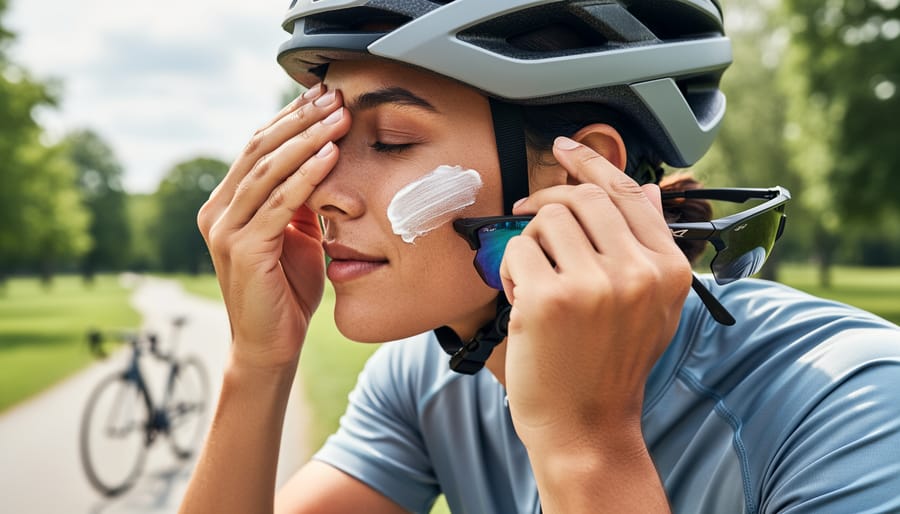
Protecting your skin during outdoor cycling takes three simple steps: prep with a sweat-resistant broad-spectrum SPF 50 sunscreen and barrier cream, reapply every 90 minutes of ride time, and cleanse gently within 30 minutes of finishing. This routine takes less than five minutes before you roll out and keeps your skin healthy through hours of sun exposure, wind exposure, and perspiration.
Your face and exposed skin face a triple threat on the bike. UV rays intensify as you climb in elevation and reflect off pavement. Wind at 15-20 mph strips away your skin’s protective moisture barrier faster than you’d experience on a casual walk. Sweat carries sunscreen down your face, pools in your jersey, and creates the perfect environment for clogged pores and irritation.
The good news? You don’t need a complicated ten-step routine or expensive spa treatments. What you do need is the right products applied at the right time and a clear understanding of how cycling specifically challenges your skin. A recreational rider logging two hours on Saturday morning faces different conditions than someone training through midday heat, but the core principles remain the same.
This guide walks you through exactly what to apply before you clip in, how to maintain protection during long rides, and what your skin needs when you’re back home. You’ll learn which ingredients actually stay put when you’re sweating, how to layer protection without feeling greasy, and why that post-ride shower routine matters as much as your pre-ride prep.
What You’ll Need: Your Skin Protection Kit
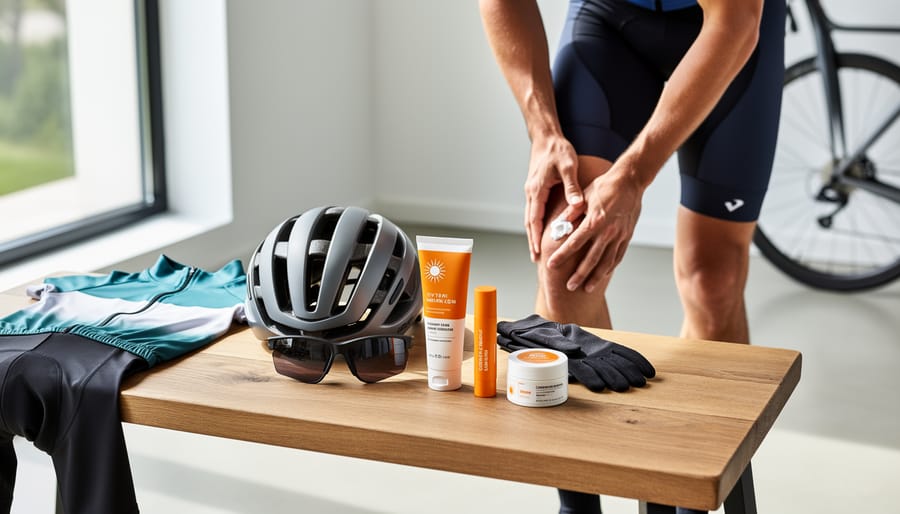
Building a solid skin protection kit is as important as packing your water bottles before a long ride. You don’t need a suitcase full of products, but having the right essentials on hand makes protecting your skin effortless rather than overwhelming.
Start with sunscreen, your most critical defense. Mineral sunscreens containing zinc oxide or titanium dioxide sit on top of skin and physically deflect UV rays, making them ideal for sensitive skin and immediate protection. Chemical sunscreens absorb into skin and convert UV rays to heat, often feeling lighter and less visible. For cycling, look for sport formulas labeled water-resistant or sweat-resistant with SPF 30 minimum, preferably 50. These stay put better than regular sunscreens when you’re working hard.
Your lips need dedicated protection too. A lip balm with SPF 30 or higher prevents painful cracking and sun damage on this thin, vulnerable skin. Choose one that won’t melt off within the first five kilometers.
A good facial moisturizer creates a protective base layer under sunscreen, especially important for managing wind exposure. Pick one suited to your skin type that won’t feel heavy or cause breakouts under your helmet.
- Pre-ride: facial moisturizer, sport sunscreen SPF 50, lip balm with SPF, chamois cream
- During ride: travel-size sunscreen for reapplication, oil-absorbing sheets or cleansing wipes
- Post-ride: gentle cleanser or micellar water, soothing moisturizer, treatment cream for any irritation
Cleansing wipes or micellar water are brilliant for mid-ride or immediate post-ride cleanup when you can’t access a sink. They remove sweat, sunscreen buildup, and grime that can clog pores. If you struggle with breakouts, this quick cleanse makes a real difference, and acne specialists in Sherwood Park often recommend not letting sweaty sunscreen sit on skin longer than necessary.
Chamois cream isn’t just for saddle comfort. It creates a friction barrier that prevents chafing on your inner thighs, underarms, and anywhere padded shorts or sports clothing might rub during long rides.
Don’t overlook protective clothing. A lightweight buff or neck gaiter shields your neck and lower face from wind and sun. Long-sleeve jerseys with UPF protection and lightweight arm sleeves offer coverage without overheating. Wide-brimmed cycling caps under your helmet add facial shade, and full-finger gloves protect hands that grip handlebars in direct sun for hours.
Keep your kit organized in a small bag so everything’s ready to grab. Replace sunscreen every season since it loses effectiveness over time.
Before You Roll Out: Safety and Skin Health Warnings
Before you clip in and head out, understanding these skin safety essentials can prevent damage that takes far longer to heal than any training ride lasts. Being smart about protection means knowing when to adjust your routine, when to postpone a ride, and what warning signs demand immediate attention.
Cloudy skies are one of the biggest traps for cyclists. UV rays penetrate cloud cover easily, sometimes up to 80% of them, yet many riders skip sunscreen on overcast days and end up with serious burns. Grey weather doesn’t equal safe weather. Similarly, don’t forget the spots that catch you by surprise: the tops of your ears, the back of your neck under your helmet, your hands between glove gaps, the V of skin at your chest, and your feet if you’re wearing sandals or low-cut socks. These areas burn fast and often.
If you’re dealing with active skin conditions like rosacea flares, open wounds, severe acne, or recent procedures like chemical peels or laser treatments, outdoor training can make things significantly worse. Sun exposure and sweat on compromised skin can lead to infection, hyperpigmentation, and prolonged healing. When in doubt, take the day off or move your workout indoors.
Before any long ride or race, patch-test new skincare products at least 24 hours in advance. Apply a small amount to your inner forearm or behind your ear and watch for redness, itching, or irritation. Discovering an allergic reaction 30 kilometers into a ride, when you’re covered in the product and sweating heavily, turns a training day into a miserable experience. Test it at home first.
Your Step-by-Step Skin Protection Routine

Pre-Ride Prep: Building Your Barrier
Start your skin prep 15 to 30 minutes before you clip in. This timing isn’t arbitrary, it gives products time to absorb and form an effective barrier before sweat and sun exposure begin.
- Cleanse your face gently with lukewarm water or a mild cleanser to remove any overnight products, oils, or debris. Pat dry with a clean towel, rubbing can irritate skin that’s about to face wind and sun.
- Apply a lightweight, non-comedogenic moisturizer if your skin tends toward dryness. Skip this step if you’re naturally oily or it’s humid; sunscreen alone provides enough moisture. Focus on cheeks, forehead, and anywhere wind typically hits you hardest.
- Wait three to five minutes for moisturizer to sink in, then apply sunscreen generously. You need about a nickel-sized amount for your face and a full shot glass worth for exposed body parts. Most cyclists use half what they actually need. Dot sunscreen across your forehead, cheeks, nose, and chin, then blend outward in upward strokes.
- Don’t forget high-risk zones: the tops of your ears, back of your neck, the V of your chest, backs of your hands, and if you’re wearing shorts, your knees and the tops of your feet. These areas burn faster than you’d expect during a long ride.
- Apply an SPF lip balm liberally. Reapply right before you leave, lips dry out quickly in wind and you’ll want that extra layer of protection from the start.
- Address friction zones last. Apply chamois cream where your saddle makes contact, and consider anti-chafe balm along sports bra lines, under arm straps, or anywhere your kit typically rubs during longer efforts.
Give everything a final few minutes to set before you head out. Touching your face or adjusting your helmet immediately after application can wipe away protection before it has a chance to work.
Mid-Ride Maintenance: Staying Protected
Once you’re out on the road, your skin protection routine doesn’t pause. For rides lasting longer than 90 minutes, you need to refresh your defenses, especially when you’re pushing hard enough to drench your kit or when your route takes you through varying terrain and sun exposure.
Sunscreen breaks down faster than you think when you’re sweating buckets on a climb or getting splashed crossing a stream. The general guidance is to reapply every two hours but for cyclists, that timeline compresses. Plan to reapply after about 80-90 minutes of riding, or immediately following any segment where you’ve sweated heavily. Yes, this means carrying a small tube of sunscreen in your jersey pocket or saddlebag. Choose a stick formula for your face since it won’t drip into your eyes and you can apply it without stopping.
Before reapplying, blot away the layer of sweat and grime that’s accumulated. Cleansing towelettes designed for athletes work brilliantly here. A quick wipe across your face, neck, and arms removes the salt and debris that would otherwise get sealed under fresh sunscreen. This simple step also prevents clogged pores and reduces the chance of breakouts later.
Pay attention to helmet friction zones as you ride. Your forehead, temples, and the tops of your ears take constant rubbing, which wears away sunscreen faster. If you notice irritation building, adjust your helmet position slightly or add a thin headband as a buffer layer.
Stay aware of how the sun’s angle shifts during your ride. That shaded bike path at 7 a.m. might be fully exposed by 10 a.m. when you return.
Post-Ride Recovery: Repair and Refresh
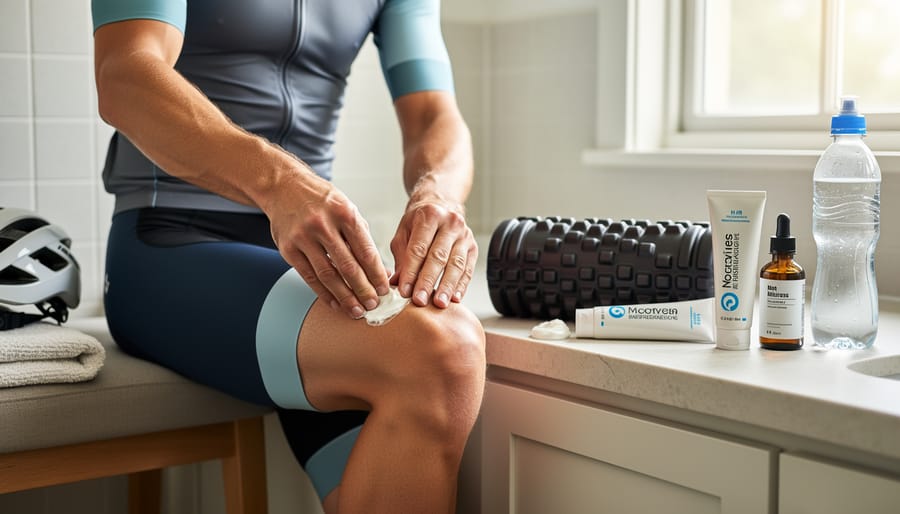
Your skin has just spent hours battling UV rays, friction, and salty sweat buildup. What you do in the first 30 minutes after you rack your bike determines whether you wake up with healthy, resilient skin or deal with breakouts, irritation, and premature damage. Think of post-ride recovery as the final lap of your skin protection routine.
Start with a cool rinse to remove the day’s layers. If you can shower immediately, use lukewarm water instead of hot, which strips away protective oils your skin desperately needs right now. A gentle, sulfate-free cleanser removes sunscreen residue, road grime, and dried sweat without over-cleansing. Pay special attention to your hairline, behind your ears, and anywhere your helmet or straps sat. These spots trap sweat and product buildup that can trigger breakouts overnight.
Can’t shower right away? Micellar water on a soft cloth lifts away surface debris remarkably well. Focus on your face, neck, and any areas that feel sticky or irritated. Follow with a damp washcloth to remove the micellar residue itself.
Once clean, conduct a quick damage assessment. Look for new freckles or darkening spots that signal sun exposure, check friction zones for raw patches, and note any areas that feel hot or tight. Catching problems early means addressing them before they become serious.
Now your skin is ready to drink in moisture. Apply a hydrating serum or essence while your face is still damp, then seal it with a richer moisturizer than you’d normally use. After high-sun days, products with niacinamide, hyaluronic acid, or ceramides help repair barrier damage and reduce inflammation. Your body needs attention too. A lightweight body lotion with aloe or centella asiatica calms windburn and sun stress.
Treat any hot spots or chafing immediately. Dab petroleum jelly or a healing balm on raw areas to create a protective barrier. For saddle sores or inner thigh irritation, clean the area thoroughly and apply an antibacterial ointment before bed.
If you’ve had significant sun exposure, adjust your evening routine. Skip active ingredients like retinol or acids tonight, which can irritate already-stressed skin. Instead, opt for gentle, restorative products. A hydrating sheet mask or overnight sleeping pack gives your skin extra recovery time while you sleep, letting you wake up ready for tomorrow’s miles.
Tackling Each Challenge: Sun, Wind, and Sweat Strategies
Sun Defense: Beyond Basic Sunscreen
While SPF 30 sunscreen checks the basic box, serious cycling demands a more strategic approach to sun defense. Your intensity level and ride duration should guide your protection choices: leisurely rides under two hours can work with SPF 30, but hard efforts or long days in the saddle call for SPF 50 or higher, reapplied every 90 minutes when you’re sweating heavily.
Check the UV index before you roll out. Ratings above 6 (high) mean sun damage happens fast, often within 15 minutes, so layer your defenses. Combine sunscreen with UPF-rated arm sleeves, cycling-specific neck gaiters, and lightweight long-sleeved jerseys. These aren’t just for pros: they block UV rays more reliably than any cream, especially on your forearms and shoulders where sunscreen wears off fastest.
If your schedule allows flexibility, shift morning rides earlier or evening sessions later to dodge the 10 a.m. to 4 p.m. peak. Even an hour’s difference cuts UV exposure significantly. For those telltale tan lines and missed spots, back of the neck, tops of hands, ankles above your socks, apply extra sunscreen and adjust your clothing coverage each ride. Rotating your kit helps too.
Wind Protection: Preventing Windburn and Dryness

Wind strips moisture from your skin faster than you realize, especially when you’re moving at speed. While you’re focused on the sun, wind is quietly breaking down your skin’s protective barrier, leading to redness, tightness, and that raw, stinging sensation known as windburn.
Start with an occlusive moisturizer before applying sunscreen. Look for products containing petrolatum, dimethicone, or shea butter, these create a physical seal that locks in hydration and blocks wind penetration. Apply a thicker layer than you would for casual wear, particularly on your cheeks, forehead, and chin where wind exposure is greatest.
A buff or neck gaiter pulled up over your lower face provides excellent protection during high-wind rides without the bulk of a full face covering. Position it to cover your cheeks and nose while leaving room to breathe comfortably. This is especially valuable when riding into headwinds or on exposed routes.
Remember that wind intensifies sun exposure by removing the thin layer of warm air near your skin that normally provides some UV filtering. Your SPF needs to work harder in windy conditions, so don’t skimp on sunscreen application even when temperatures feel cool.
Sweat Management: Keeping Skin Clear and Comfortable
Sweat creates the perfect environment for skin problems, but the right approach keeps you comfortable ride after ride. Start with moisture-wicking base layers that pull sweat away from your skin instead of trapping it against your body. When you choose cycling shorts and jerseys, look for fabrics specifically designed to manage perspiration while allowing airflow.
Face and helmet acne plague many cyclists because sweat, sunscreen, and friction combine under your helmet. Combat this by using a lightweight, non-comedogenic sunscreen on your forehead and face, and washing your helmet pads weekly. Between rides, cleanse your face promptly to prevent pores from clogging with the mix of sweat and product buildup.
Salt residue from dried sweat irritates skin and disrupts its natural pH balance. After rides, rinse sweat-prone areas with cool water and use a gentle, pH-balanced cleanser. If you notice white salt streaks on your skin or kit, you’re losing significant minerals and need to increase hydration before they crystallize and cause irritation or tiny abrasions that can become entry points for bacteria.
How to Know Your Skin Protection Is Working
Your skin will tell you whether your protection routine is working, you just need to know what to look for. After a few weeks of consistent rides, check for these positive signs: your skin tone remains even without new freckles or dark spots appearing, your face feels comfortable rather than tight or raw after rides, and you’re not dealing with persistent redness or flaking. If you can maintain training consistency without skin issues sidelining you, your routine is doing its job.
Watch for warning signs that something needs adjusting. New or darkening sunspots, especially on your hands, shoulders, or the bridge of your nose, mean your sun protection has gaps. Persistent dryness, cracked lips, or windburn that doesn’t improve between rides suggests you need richer barrier products. Breakouts concentrated around your helmet line or jawline indicate trapped sweat and friction, time to reassess your cleansing routine or helmet padding.
Track your skin health through the season by taking monthly photos of your face and frequently exposed areas in consistent lighting. Note patterns: does your skin react differently during high-heat weeks versus cooler months? Are certain products less effective after two hours than one?
Consult a dermatologist if you notice any mole changing in size, shape, or color, persistent rough patches that don’t heal, or if you’re developing significant new sun damage despite protection efforts. A yearly skin check is smart for any outdoor athlete, but don’t wait for the annual appointment if something concerns you. Your dermatologist can also recommend prescription-strength options if over-the-counter products aren’t cutting it for your riding schedule.
Common Questions About Cycling and Skin Care
What’s the difference between waterproof and water-resistant sunscreen for cycling?
Water-resistant sunscreen maintains its SPF protection for 40 minutes of sweating or water exposure, while waterproof lasts 80 minutes. For cycling, choose water-resistant formulas rated for 80 minutes since you’ll sweat heavily, and reapply every 90 minutes regardless of the label claims.
Can I use natural or mineral sunscreens instead of chemical ones?
Mineral sunscreens with zinc oxide or titanium dioxide work well for cycling and suit sensitive skin, though they may leave a white cast and feel heavier. Chemical sunscreens absorb UV rays rather than blocking them and tend to be lighter and easier to layer under helmets, but some riders experience irritation with certain active ingredients like oxybenzone.
How do I adjust my skincare routine for different seasons?
Winter riding demands richer barrier creams to combat wind and cold, while summer calls for lighter, gel-based moisturizers that won’t clog pores under heavy sweat. You’ll need the same sun protection year-round since UV rays reflect off pavement and snow, but increase hydration products during dry winter months and add oil-control steps in humid summers.
Why am I breaking out more since I started cycling outdoors?
Helmet acne and breakouts often stem from sweat, bacteria, and friction trapped under your helmet and straps. Clean your helmet pads weekly, use a salicylic acid cleanser post-ride to clear pores, and consider applying a thin layer of oil-free moisturizer before rides to reduce friction without blocking sweat glands.
Do I really need sunscreen on cloudy days?
Yes. Up to 80 percent of UV rays penetrate cloud cover, and you can still burn or accumulate sun damage on overcast days. Cyclists face extended exposure times compared to other outdoor activities, so daily sunscreen protects your skin investment regardless of visible sunshine.
Beyond these common concerns, think about your specific skin type and climate when building your routine. If you have oily or acne-prone skin, seek out non-comedogenic formulas labeled specifically for athletic use. Dry or mature skin benefits from products with hyaluronic acid or ceramides that maintain hydration despite wind exposure. Those in high-altitude areas need higher SPF since UV intensity increases roughly 10 percent per thousand feet of elevation.
For riders in humid climates, lightweight gel sunscreens and moisture-wicking headbands prevent the heavy, greasy feeling that makes you want to skip protection altogether. Desert and arid-climate cyclists should layer a hydrating serum under sunscreen and carry a facial mist for mid-ride refresh. Don’t avoid over-cycling concerns just because you’re managing skin issues; adjust your routine instead of cutting back on rides you love.
If a product stings, causes redness, or makes your skin feel worse after rides, stop using it. Your skin shouldn’t have to suffer for your training. Test one new product at a time on shorter rides before committing to it for a century or multi-day tour, and keep notes on what works across different conditions so you can refine your kit as seasons change.
Protecting your skin during outdoor rides is not about vanity. It is about being smart, strategic, and sustainable with your training. Every time you apply sunscreen, refresh mid-ride, or take five minutes for post-ride skincare, you are investing in your ability to show up tomorrow and the next day and the day after that. Consistent training requires a body that feels good, and your skin is on the front lines of every outdoor session.
The routine that works for you might look different from another cyclist’s approach, and that is exactly how it should be. Maybe you thrive with a minimal three-product system, or perhaps you have found that addressing wind damage requires extra layers of protection. What matters is that you have built a process you can stick with, one that fits your rides, your skin, and your life.
Strong cyclists take care of themselves. They fuel properly, they rest when needed, and they protect their skin from the elements that could sideline them. You have earned every mile you ride. Make sure your skin can keep up with your ambitions, because the road ahead is long and you deserve to enjoy every bit of it with skin that feels as strong as you do.