
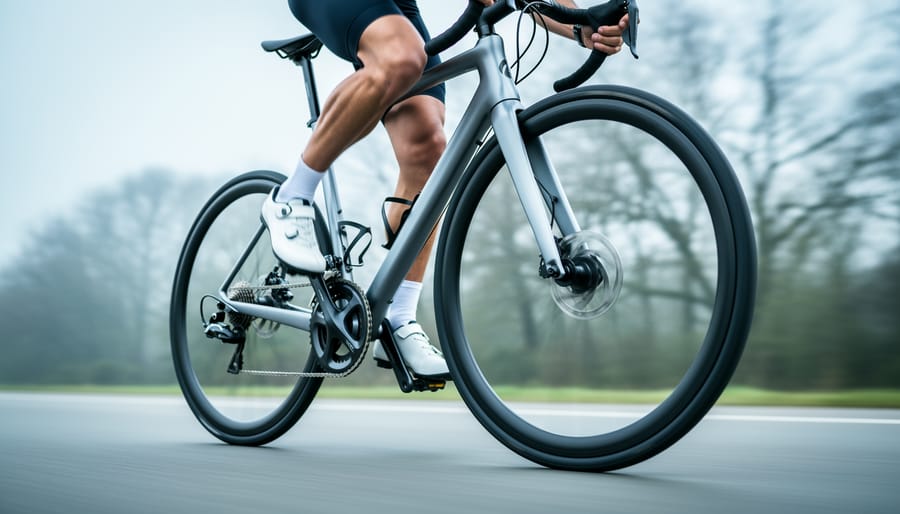
Yes, cycling is considered a low-impact exercise. Low impact means your body stays supported and your feet never pound the ground, so each pedal stroke asks far less of your knees, hips, and ankles than running or jumping does. Your bike carries your body weight, and your joints move through a smooth, repeating arc instead of absorbing a hard landing again and again.
That’s why cycling is such a welcoming way to build fitness, whether you’re returning after a break, easing back from an injury, or simply want to ride for years without wearing yourself down. Low impact doesn’t mean low effort, though. A steep climb or a fast group ride can still leave your legs burning, and the way you ride changes how much stress your body takes on. Road riding, mountain biking, indoor cycling, and relaxed neighborhood rides all feel different on your joints and muscles.
In this guide, we’ll break down what low impact really means, how cycling treats your joints, and which types of riding shift the answer. Then we’ll look at an honest, practical way to support tired legs afterward: compression.
What ‘Low Impact’ Actually Means for Cyclists
“Low impact” gets thrown around a lot, so let’s pin it down. In plain terms, low-impact exercise is movement that avoids the jarring, repetitive force your joints take when your feet slam into the ground. Think of the thud of each running stride or the landing after a jump. Cycling sidesteps most of that.
The reason is simple. Your body weight is held up by the saddle, the pedals, and the handlebars, so your knees, hips, and ankles aren’t absorbing a hit every time you move. The pedal stroke is also smooth and circular, which means force builds and fades gradually instead of arriving in sudden spikes.
Here are a few terms worth knowing:
- Low-impact exercise
- Movement where at least one part of your body stays supported or in contact with something, so your joints avoid sharp, repeated shocks. Cycling, swimming, and walking all fit.
- High-impact exercise
- Movement where you leave the ground or land with force, sending a jolt through your legs and spine. Running, jumping, and many dance workouts are common examples.
- Joint loading
- The amount of force passing through a joint, such as your knee, as you move. Lower impact usually means gentler loading, but it never drops to zero.
- Muscular fatigue
- That heavy, tired feeling when your muscles have worked hard for a while. You can feel plenty of it on a bike, even when your joints feel fine.
So what doesn’t “low impact” mean? It doesn’t mean zero stress, because your legs, back, and hands still work. It doesn’t mean easy either. A hilly ride can leave you gasping. And it isn’t injury-proof, since fit, mileage, and sudden jumps in training can still cause overuse soreness.
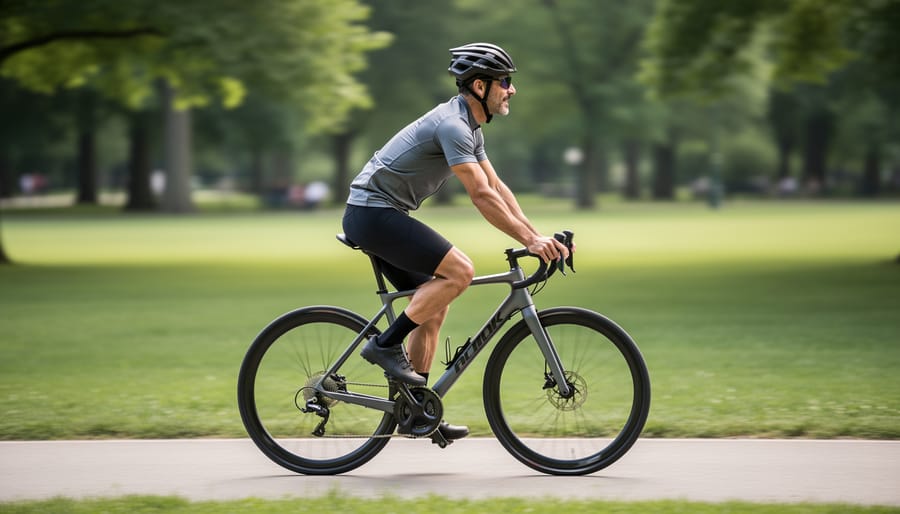
Why Cycling Is Gentle on Your Joints (and Where It Still Works Hard)
What Happens in Your Body When You Pedal
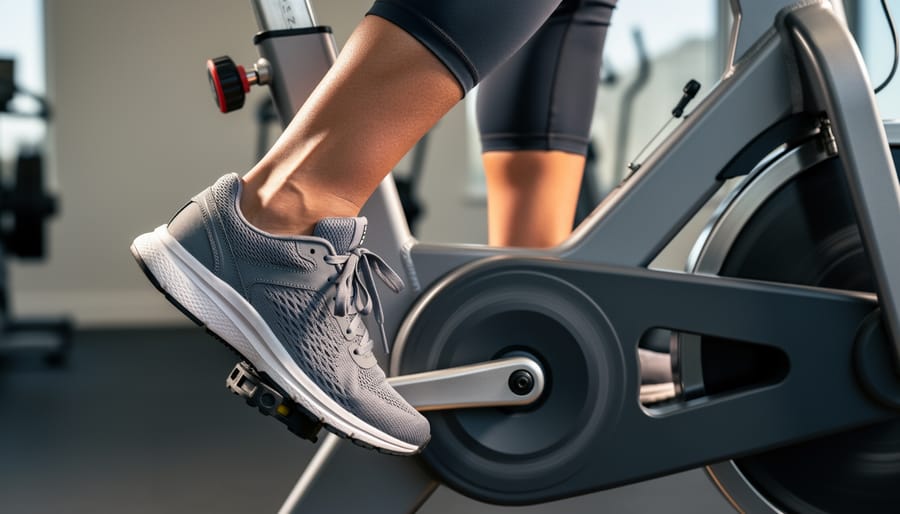
Picture the pedal stroke as a smooth circle rather than a series of stomps. On the downstroke, your quads and glutes do most of the work, pushing the pedal forward and down. As the pedal sweeps around the bottom, your calves help transfer that power, and on the way back up your hamstrings and hip flexors lift and pull the pedal through. Then the circle starts again, roughly 60 to 90 times a minute for most riders.
All that repetition asks a lot of your leg muscles. Each contraction squeezes blood through the veins and back toward your heart, which is why your legs feel warm and pumped once you get going. Over a long ride, though, those muscles slowly tire. You might notice a heavy, dull feeling in your thighs or calves, especially near the end.
That gradual fatigue is completely normal, and it’s the reason recovery matters. Helping your legs bounce back is where tools like compression come in.
Where Low Impact Can Still Leave You Sore
Low impact doesn’t mean low soreness, and almost every rider feels it somewhere. Pedaling is repetitive, so small setup issues add up over hundreds of turns per mile. Here are the usual spots and the everyday reasons behind them:
- Knees: a saddle that’s too low or too high changes how the joint bends with every stroke.
- Lower back: long stretches in an aggressive position or weak core muscles that tire out.
- Neck and shoulders: holding your head up and your arms tense, especially on longer rides.
- Hands: pressing hard on the grips, which squeezes nerves and leaves fingers tingly.
- Feet: cleats or shoes that are misaligned or too snug, causing hot spots or numbness.
The other big culprit is doing too much, too soon. Jumping from short spins to a big weekend mileage push, or adding hills overnight, asks your body to adapt faster than it can. That’s true whether you’re on your first month of riding or your fifteenth year.
None of this means you’re doing something wrong. A little tired, achy muscle is normal. Pain that’s sharp or lingers is your cue to adjust your fit, ease back, or check in with a professional.
Types of Cycling and How Much Impact Each One Has
Not every ride feels the same on your body, and that’s good news, because there’s a style of cycling for almost every comfort level. Here’s a quick tour of how the main types compare.
Indoor or stationary cycling is usually the gentlest. There’s no bumpy road, no sudden stops, and the smooth, steady motion keeps jolts to a minimum. It’s a great pick if you’re easing back into movement or want full control over how hard you work.
Road riding is also very low impact. Smooth pavement means a steady pedal stroke, though long hours in the saddle can leave your lower back, neck, and hands feeling it.
Commuting tends to land in the same gentle zone. Short, practical rides add up, but stop-and-go traffic and the odd pothole or curb can add a little extra jostle.
Gravel riding sits in the middle. Loose stones and washboard surfaces send more vibration through your hands, arms, and seat, even though your joints still aren’t taking any pounding. Wider, softer tires can take the edge off.
Mountain biking is the one that can bring the most jolt. Rocky trails, drops, jumps, and fast descents mean bigger bumps for your wrists, shoulders, and back, and a harder-working body overall. Many riders love that challenge, and a good suspension setup and a relaxed, flexible stance help absorb a lot of it.
So most cycling really is low impact, with rough terrain and descents being the main things that turn up the volume. If a certain style leaves you sore, you can switch surfaces, soften your tires, or shorten the ride rather than quit. Whether you’re spinning along a quiet path or tackling a trail, you get to choose the kind of ride that feels good for you.
Compression Benefits in Cycling: How Compression Gear Supports Your Legs
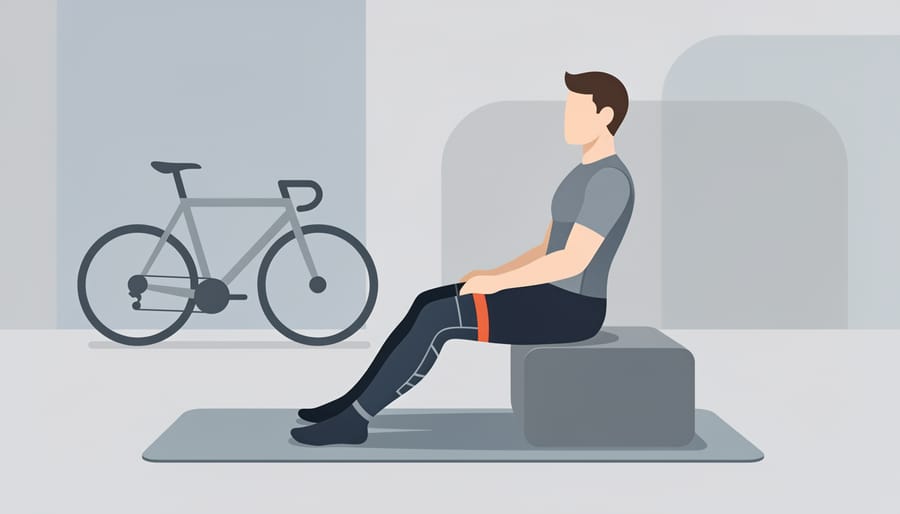
Compression Gear Options Cyclists Can Choose From
Compression comes in a few forms, so you can pick what suits the way you ride.
Compression socks cover the foot and calf and are a popular starting point. Many riders reach for them on long rides, or on days when their legs feel heavy.
Calf sleeves cover just the lower leg and leave your feet free. They’re handy if you already have a favourite pair of cycling socks or shoes you don’t want to change.
Compression tights or shorts add gentle support through the thighs and hips. Riders often wear them under or instead of regular kit, especially across a long day in the saddle.
Recovery wear is made for after the ride, when you’re off the bike and putting your feet up. It’s usually softer and a little less snug than ride-day gear.
Which one you choose can depend on the different kinds of cycling you enjoy.
Fit matters more than anything. Check each brand’s size chart against your own calf, thigh, and hip measurements, since bodies come in every shape. Gear should feel snug and supportive, never painful or numbing.
When to Wear Compression: During, After, or Both
There’s no single right answer here, and that’s the fun part. Many riders wear compression during long rides, especially when they know their legs will be working for hours. A snug pair of socks or calf sleeves can leave legs feeling less heavy by the final climb.
Others save it for afterward. Slipping on recovery tights or socks once you’re home can feel like a comforting wind-down, particularly on back-to-back ride days when you want your legs to feel ready again.
Compression also earns its place on travel days. If you’re sitting in a car or on a plane after a big event, wearing it for the journey can make stiff, tired legs feel a little better. And a relaxed recovery evening on the couch is a perfectly good time to try it too.
Some people use it during and after, while others only need it one way. Try different combinations on a few rides and notice what feels good for you.
Whatever you choose, aim for snug but never painful. Compression should feel like a gentle hug, not a squeeze. If it pinches, tingles, or leaves deep marks, go up a size or skip it for the day.
How to Keep Cycling Gentle on Your Body
Cycling gives you a head start on being gentle with your body, but a few small habits help you keep it that way. None of them need to be complicated, and you don’t have to do them all at once. Pick the ones that feel doable and build from there.
Here’s a quick-reference list to keep in your back pocket:
- Get a comfortable bike fit so your saddle, handlebars, and pedals suit your body.
- Increase your distance and time in small steps instead of big jumps.
- Build in rest days so your legs have time to bounce back.
- Stretch gently after rides, focusing on quads, hamstrings, calves, and hips.
- Drink water before, during, and after your ride.
- Add a little strength work, like squats or glute bridges, to support your joints.
- Try optional recovery tools, such as compression pants if you like how they feel.
A good bike fit is worth prioritizing, because a saddle that’s too high or low can quietly strain your knees and lower back. Many bike shops offer fit help, and even small tweaks can make rides feel noticeably better.
Progress is personal, and a slow build is still progress. If you’re coming back from a break or just starting out, a few shorter rides a week beats one heroic effort that leaves you sore for days.
Most of all, listen to your body. Mild tiredness after a good ride is normal, but sharp or lingering pain is a cue to rest, adjust your setup, or check in with a healthcare professional. You know your body best, so trust what it’s telling you.
Your Questions About Cycling, Joint Impact, and Compression
Here are quick answers to the questions riders ask us most often.
Is cycling good for bad knees?
Many people with sore knees find cycling more comfortable than activities that involve pounding, because the saddle carries your weight. A good bike fit matters a lot here, so it’s worth getting your saddle height checked, and a quick chat with your doctor or physio is wise if you have a diagnosed knee condition.
Is cycling lower impact than running?
Generally, yes. There’s no repeated landing on the ground with each stride, so joints take far less jarring force, though rough terrain can add some vibration.
Can cycling still cause injuries?
It can. Overuse soreness in the knees, lower back, neck, and hands is common, usually from fit issues or ramping up mileage too quickly.
Does compression gear really help cyclists?
Some riders feel less leg heaviness and enjoy a more comfortable recovery, but the research is mixed and experiences vary. Think of it as an optional comfort tool, not a guarantee.
A couple of other questions come up often. Should beginners wear compression? You don’t need it to start riding, and plenty of new cyclists get along happily without it. If you’re curious, try a pair of socks or sleeves on a longer ride and see how your legs feel. While you’re sorting out gear, it also helps to know how to choose cycling shorts that suit your body, since saddle comfort makes a big difference.
And is cycling a good option during recovery or low-fitness periods? It often is, because you control the pace and effort, and you can start with short, easy rides. If you’re coming back from an injury or have a health condition, check in with your healthcare provider first so you can ride with confidence.
So, is cycling considered low impact? Yes. Your weight rests on the saddle, pedals, and handlebars, and the smooth, circular motion is kind to your knees, hips, and ankles. That’s a big part of why so many of us feel welcome on two wheels, whether we’re easing back into movement or chasing a long weekend ride.
Low impact doesn’t mean effortless, though. Tired legs come with the territory, and a little post-ride heaviness is normal. Compression gear can be one helpful tool among many, alongside a good bike fit, gradual mileage, rest days, and gentle stretching. Try what feels good and leave what doesn’t.
It also helps to stay curious about your bike. Learning the bike warning signs can keep small niggles from turning into bigger ones.
Now we’d love to hear from you. What helps your legs feel their best after a ride? Share your go-to tricks, because every rider’s tips make this community stronger.