
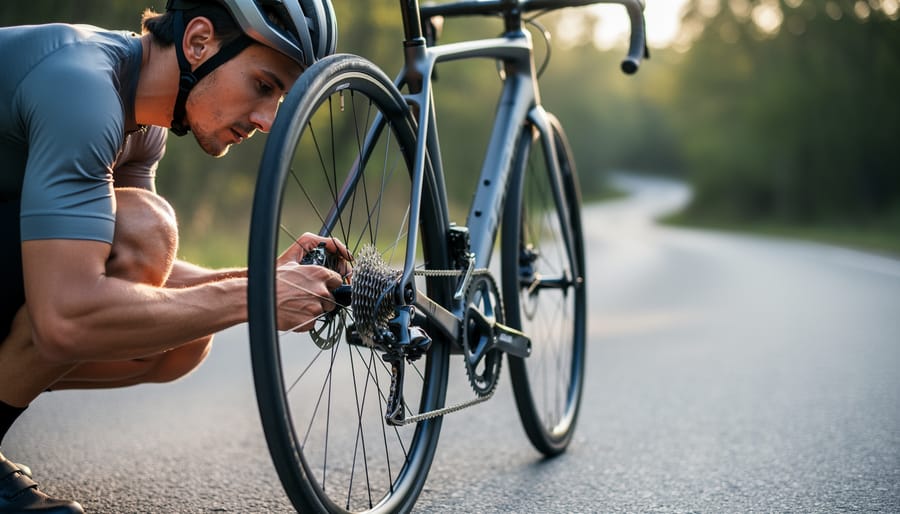
Listen to your bike during every ride—that subtle clicking, rubbing, or squeaking often signals something needs attention before it becomes a roadside emergency. Your bicycle communicates constantly through sounds, sensations, and performance shifts that are easy to miss when you’re focused on the rhythm of pedaling or the scenery ahead.
Pay attention when your gears hesitate or skip unexpectedly, especially on climbs you normally handle smoothly. This grinding or slipping feeling means your drivetrain needs adjustment or cleaning, and ignoring it can lead to more expensive repairs or a chain that snaps mid-ride.
Notice any new vibrations through your handlebars or unusual pulling to one side when braking. These sensations indicate potential issues with your wheels, brakes, or headset—all critical for safe handling and stopping power.
Check for changes in how much effort familiar routes require. If your regular loop suddenly feels harder without explanation, low tire pressure, brake drag, or bearing problems might be stealing your energy with every pedal stroke.
Track any clicking or popping that matches your pedaling cadence. This rhythmic sound typically points to loose pedals, crank arms, or bottom bracket issues that worsen quickly once they start.
The key is developing awareness during your rides rather than waiting for complete failure. Most mechanical problems give advance warning through small changes in sound, feel, or performance. When you catch these early signals and respond promptly, you’ll spend more time enjoying your rides and less time dealing with preventable breakdowns.
The Language Your Bike Speaks (And Why You Need to Listen)
Your bike is talking to you constantly. Every ride is a conversation, a feedback loop between you and your machine. That subtle wobble when you brake? That’s your bike saying something. The slight grinding sound when you shift? Your bike is communicating. The resistance you feel in your pedal stroke that wasn’t there yesterday? Message received, or at least, it should be.
Here’s the thing many of us weren’t taught: listening to these signals is a skill, and it’s one that makes your empowering cycling experience even safer and more enjoyable. Too often, especially as women, we’ve been socialized to push through discomfort, to not make a fuss, to question whether what we’re noticing is really important. But your observations about your bike’s performance are valid and valuable.
Think of it this way: you know your body better than anyone else, right? The same goes for your bike. You’re the one in the saddle, feeling every vibration, hearing every sound, noticing when something just feels off. That gut instinct that whispers “something’s not quite right” deserves your attention, not dismissal.
Performance changes during rides are your bike’s way of waving red flags before small issues become dangerous ones. A chain that skips occasionally becomes a chain that breaks mid-ride. A brake that feels spongy becomes a brake that fails when you need it most. Learning to recognize and respect these signals isn’t being overly cautious or high-maintenance. It’s being smart, observant, and taking ownership of your safety and your ride quality. Trust yourself. Your instincts are right more often than you think.

Warning Signs You’ll Feel on Every Ride
When Your Bike Feels ‘Off’ But You Can’t Name It
You know that feeling when something just isn’t quite right with your bike, but you can’t put your finger on it? Maybe your usual routes feel harder than they should, or your bike seems less responsive when you shift or brake. Trust that instinct. You’re not imagining things, and you’re definitely not being overly cautious.
That vague sense of something being off is your body picking up on subtle changes in how your bike performs. After spending hours in the saddle, you’ve developed an intuitive sense of what normal feels like. When that changes, it matters.
Common culprits behind this sluggish feeling include under-inflated tires, which can rob you of speed without being obviously flat. A drivetrain that needs cleaning or lubrication might create just enough resistance to make every pedal stroke feel like you’re working harder. Sometimes it’s brake pads dragging slightly against the rim or rotor, creating friction you feel but can’t always hear.
Your chain might be stretched and ready for replacement, or your cables could be dirty and binding. Even a poorly adjusted saddle height by just a few millimeters can make your entire ride feel awkward.
Don’t dismiss these sensations as being out of shape or having an off day. Take a few minutes to investigate. Walk around your bike, spin the wheels, shift through the gears while stationary, and squeeze the brakes. Often, a quick inspection will reveal exactly what your instincts were telling you.
Sounds That Should Stop You in Your Tracks
Your bike talks to you through sounds, and learning its language can save you from a roadside breakdown. Let’s decode what you’re hearing out there.
That rhythmic clicking sound often means your chain needs attention. If it’s clicking with each pedal stroke, it might be time for a cleaning and lube when you get home. However, if the clicking is accompanied by the chain slipping between gears, pull over and check that everything’s shifting properly before continuing.
Grinding noises are your bike’s way of saying “help me now.” This harsh, metal-on-metal sound usually points to brake pads worn down to nothing or a drivetrain crying out for lubrication. Don’t ignore this one. Find a safe spot to stop and investigate, especially if it’s coming from your brakes.
Squeaking can feel embarrassing when you roll up to a group ride, but it’s usually not urgent. Brake squeal in wet conditions is normal, though persistent squeaking from your brakes or saddle area deserves attention at home.
Rubbing sounds, like your brake pad constantly touching the rim or rotor, won’t strand you immediately but will slow you down and wear components faster. You can often continue your ride, but address it soon to avoid bigger problems.
The Wobble, Shake, and Shimmy
You’re cruising along when suddenly your bike starts feeling like it’s doing an unwanted dance routine. That wobble, shake, or shimmy can range from mildly annoying to genuinely concerning, and it’s important to understand what your bike is trying to tell you.
First, let’s figure out what you’re experiencing. A front wheel wobble often feels like your handlebars are gently swaying side to side, especially at certain speeds. Handlebar shake is more aggressive, sometimes called “speed wobble,” and can feel downright scary. Frame shimmy tends to vibrate through your whole body, particularly noticeable in your saddle and pedals.
Here’s the detective work: Is this happening on one particular stretch of road, or everywhere? If it’s just that bumpy section on your usual route, you’re likely fine. Your bike is simply responding to rough pavement. But if the sensation follows you from smooth roads to rough ones, it’s time to investigate your bike itself.
Quick safety checks you can do: Are your wheels properly secured in the dropouts? Give them a firm squeeze. Is anything loose in your headset? Hold your front brake and rock the bike back and forth. Feeling clunking? That’s your answer. Sometimes a slightly deflated tire is the culprit, creating that unsettling wobble that disappears once you pump it up.
If you can’t pinpoint the source or the shaking intensifies, slow down and find a safe place to stop. Trust your instincts here.
When Your Gears Have a Mind of Their Own
You’re cruising along, ready to tackle that hill, when suddenly your bike has other plans. You shift gears and nothing happens, or worse, your chain decides to throw a little tantrum and skip across the cassette. We’ve all been there, and it’s incredibly frustrating when your drivetrain develops a personality you didn’t ask for.
When gears slip under pressure or refuse to shift smoothly, your bike is waving a pretty significant flag. Maybe you push down on the pedals and feel that sickening skip as the chain jumps between gears. Or perhaps you’re clicking your shifter repeatedly, but your chain stubbornly stays put. These aren’t quirks to brush off as normal bike behavior.
What’s really happening? Your cables might be stretched or frayed, your derailleur could be misaligned, or your chain and cassette might be worn down from all those miles you’ve logged together. Sometimes it’s as simple as a dirty drivetrain crying out for attention, but other times it signals components that need replacing.
The good news is that catching these signs early prevents that awful moment when your chain completely gives up mid-ride. If your gears are acting unpredictable, it’s time for a tune-up. Your drivetrain deserves the same care you give to every other aspect of your riding life.
Brake Performance: Your Most Critical Warning System
Your brakes are quite literally your lifeline on the bike, so paying attention to how they’re performing isn’t just good maintenance – it’s essential safety awareness. The good news? Your brakes will usually give you plenty of warning before they fail completely, and learning to recognize these signs means you can ride with confidence and act before a minor issue becomes a dangerous one.
Let’s talk about what to watch for. Reduced stopping power is often gradual, so you might not notice it immediately. If you’re finding yourself squeezing harder than usual or needing more distance to slow down, trust that instinct. Brake fade – when your brakes lose effectiveness during a long descent – feels scary because it often happens when you need them most. If you experience this, shift to a lower gear to help control your speed and find a safe spot to stop and let your brakes cool down.
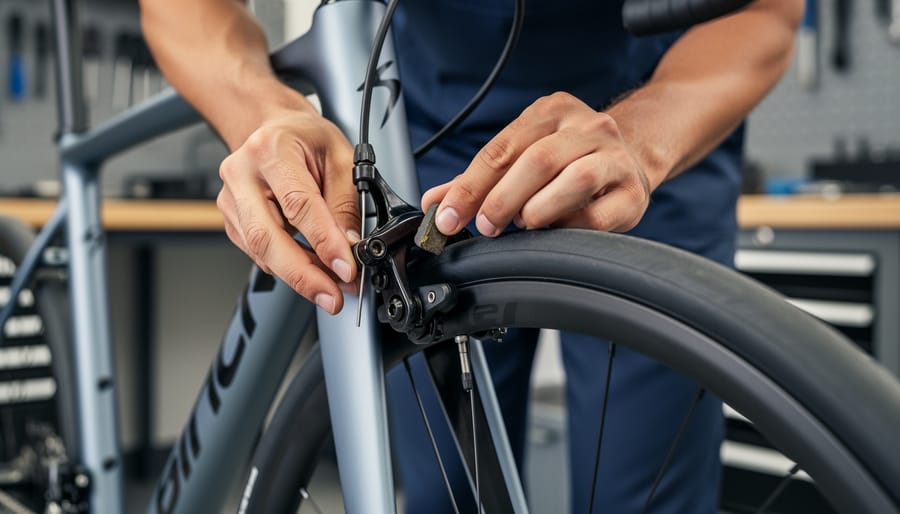
Squealing brakes are incredibly common and usually just annoying rather than dangerous. Often it’s just brake dust or moisture, though persistent squealing can indicate worn pads. A spongy or mushy feeling when you squeeze your brake levers, however, is more serious – this typically means air in your hydraulic system or stretched cables that need immediate attention.
Here’s the critical distinction: if your brakes are pulling you to one side, making grinding metal-on-metal sounds, or if a lever suddenly goes all the way to the handlebar without resistance, stop riding immediately. These signs indicate potential brake failure, and no ride is worth that risk.
For less urgent issues like squealing or gradually decreasing power, finish your ride cautiously, avoid steep descents, reduce your speed, and get your bike to a shop within a day or two. There’s absolutely no shame in cutting a ride short or calling for pickup – that’s not being overly cautious, that’s being smart and keeping yourself safe for all the rides ahead.
What Your Body Tells You About Your Bike
Your body is an incredible feedback system, and sometimes it’s trying to tell you something important about your bike. We’re often told that discomfort is just part of getting stronger, but that’s not always the case. If you notice new aches in your shoulders, wrists, or lower back during rides that used to feel comfortable, it might not be about your fitness level at all. These sensations could be signals that something mechanical needs attention.
Pay attention when you find yourself shifting your position more frequently than usual, or when you’re gripping the handlebars tighter without realizing it. These subtle adjustments often mean you’re unconsciously compensating for something that’s not quite right with your bike. Maybe your saddle has slipped slightly, or your tire pressure has dropped more than you thought.
Unusual fatigue during familiar routes deserves investigation too. If your regular loop suddenly feels exhausting, before you blame yourself, check your bike. Low tire pressure, dragging brakes, or a drivetrain that needs cleaning can all make you work significantly harder without obvious symptoms.
Your instincts matter here. Women’s feedback about discomfort is too often dismissed or attributed to lack of strength, but you know your body and your confidence on the bike best. Trust what you’re feeling. When something feels different or wrong, that intuition is valuable data pointing you toward a mechanical issue that deserves checking before your next ride.
Your Mid-Ride Checklist: Quick Stops That Save Rides
You’re cruising along when something feels off. Maybe there’s a new sound, a wobble, or your shifting just isn’t cooperating. Before you panic or push through, let’s talk about what actually deserves your attention right now.
First, find a safe spot to pull over. A wide shoulder, parking lot, or quiet side street works perfectly. Take a breath and give yourself a moment to assess without traffic rushing past.
Start with the basics. Check your tires by giving them a firm squeeze. They should feel resistant, not squishy. Look for anything obviously stuck in the tread or sidewall damage. A slow leak might get you home, but a visible gash or rapidly deflating tire means it’s time to change it or call someone.
Next, spin your wheels while the bike is stationary. They should rotate smoothly without rubbing or wobbling side to side. A slight wobble usually means your wheel needs truing, which can wait until you’re home. Significant wobbling or actual rubbing against the brake pads means you should slow down your pace for the return trip.
Listen to your drivetrain. Shift through your gears while pedaling gently. Occasional chain noise is normal, but grinding sounds or the chain slipping under pressure means you should avoid hills and heavy pedaling.
Check that nothing is loose by gently wiggling your handlebars, seat, and wheels. Everything should feel secure. If your handlebars move independently from your front wheel, stop riding immediately.
Here’s the thing: you know your bike better than anyone. Trust your gut. If something feels genuinely wrong or unsafe, there’s absolutely no shame in calling for a ride. Getting home safely beats pushing through every single time.

Building Your Bike Awareness Practice
Here’s the truth: becoming attuned to your bike’s signals isn’t something you master overnight, and that’s completely okay. Think of it like learning to read your body during rides. At first, everything feels new and maybe a little overwhelming, but with each outing, you’ll notice more and develop a deeper connection with your bike.
Start small with a simple pre-ride routine. Before you head out, take just two minutes to bounce your bike gently and listen. Does anything rattle? Give your tires a squeeze. Spin your wheels. You’re not looking for perfection; you’re building familiarity with how things should feel and sound when everything’s working well.
Consider keeping a ride journal, even if it’s just quick notes in your phone. “Heard clicking noise when climbing today” or “brakes felt softer than usual” helps you spot patterns over time. These observations become your personal reference guide, and watching yourself grow in this awareness builds cycling confidence in ways that extend far beyond mechanics.
Remember, every experienced cyclist you admire started exactly where you are now. They learned by paying attention, asking questions, and trusting their instincts. Some rides you’ll notice everything; other times you’ll be so caught up in the joy of riding that you miss the signs, and that’s part of the journey too. Give yourself permission to learn at your own pace.
Your bike is speaking to you every time you ride, and learning to listen is one of the most valuable skills you’ll develop as a cyclist. By tuning into those subtle sounds, vibrations, and changes in how your bike feels, you’re not just preventing problems—you’re building confidence and deepening your connection to the power of cycling. Remember, noticing something feels off doesn’t mean you’ve done anything wrong. It means you’re paying attention, and that awareness keeps you safer on every ride.
Whether you’re just starting out or have years of miles behind you, we’re all constantly learning to read our bikes better. Trust what you notice. Ask questions when something puzzles you. Reach out to fellow riders or your local bike shop when you need guidance. There’s no shame in seeking help—in fact, it’s a sign of smart, responsible cycling. Every weird noise you investigate, every odd feeling you address, makes you a more capable and empowered rider. Keep listening, keep learning, and enjoy the journey ahead.